

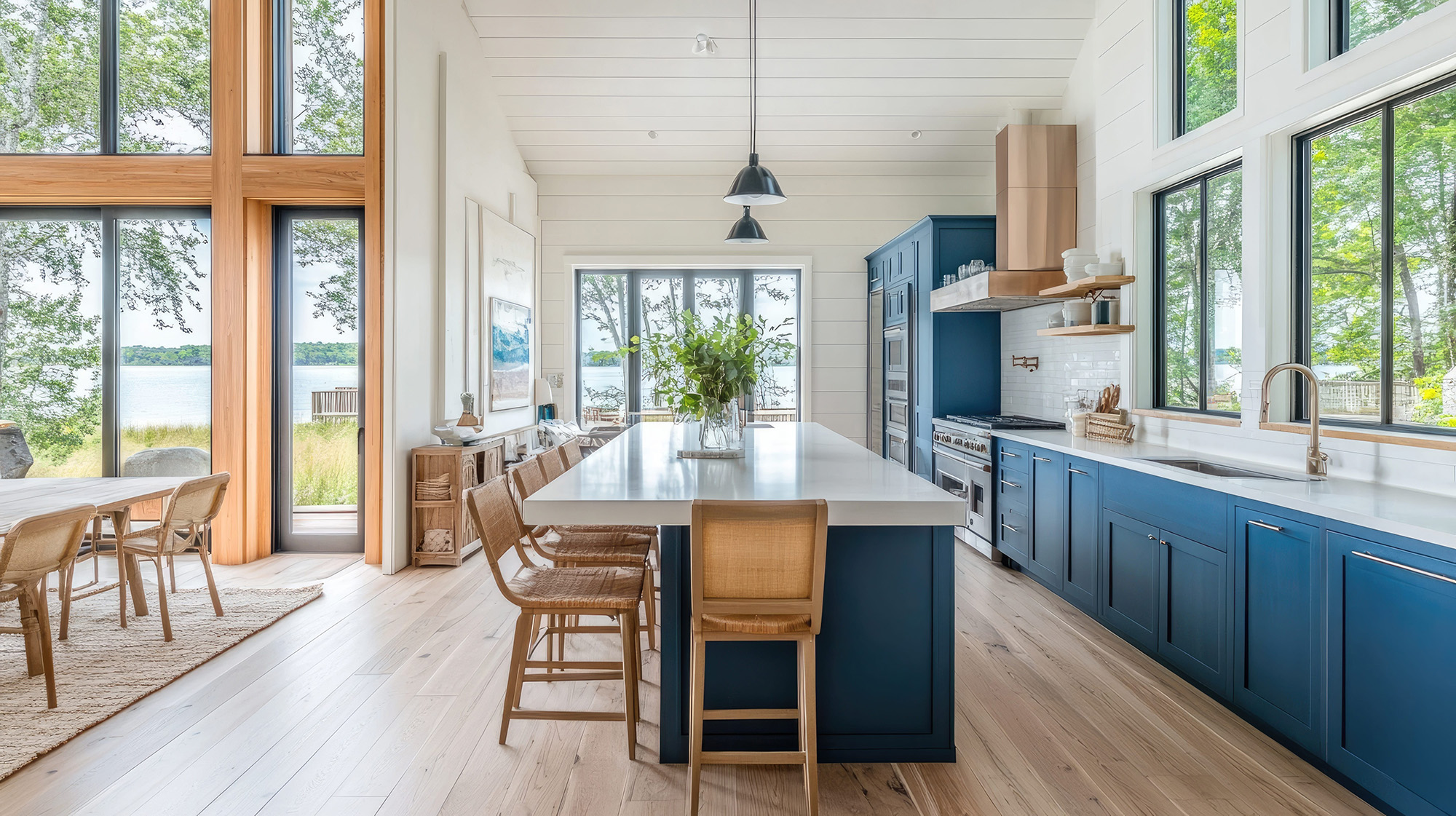
Color has the power to make a kitchen feel sunny and inviting, calm and refined, or dramatic and distinctive. During a kitchen remodel in Denton, North Carolina, the right palette can also bring cabinets, countertops, backsplash tile, flooring, hardware, and lighting together into a design that feels complete.
Choosing a palette involves more than selecting a favorite cabinet color. Every finish responds differently to natural and artificial light, and large surfaces can affect one another once they are installed. By considering undertones, contrast, texture, and the amount of each color used, homeowners can create kitchens that feel personal without becoming visually overwhelming.
Warm White, Natural Wood, and Soft Black
Warm white remains a dependable choice for kitchens because it creates a bright, flexible foundation. Unlike a stark blue-white, a creamy or softly warmed shade pairs comfortably with natural wood and earthy materials.
A balanced palette might include:
Warm white perimeter cabinetry
A natural oak or walnut-toned island
Light quartz countertops
Soft black hardware
Cream, greige, or handmade-look backsplash tile
Medium-toned wood-look or hardwood flooring
This combination works well in farmhouse, transitional, and updated traditional homes. Black accents add definition, while the natural wood prevents the room from feeling overly crisp or impersonal.
When using warm white cabinets, check the undertones of the countertop and backsplash. A warm cabinet can appear yellow beside an icy gray surface, while a cool white may look blue next to cream tile.
Earthy Green with Cream and Warm Metal
Green cabinetry has become an appealing way to add color while maintaining a connection to nature. Sage, olive, and muted forest tones can feel especially comfortable in Denton homes surrounded by North Carolina’s wooded landscapes.
Green can be paired with:
Cream or off-white walls
Light stone-inspired countertops
Brushed brass or aged bronze hardware
Warm wood flooring
Handmade-look backsplash tile
Natural woven or wood accents
Lighter sage shades can be used throughout the cabinetry, while deeper greens often work well on an island or lower cabinets. If the green has a gray undertone, warmer accessories can keep the room from feeling cool or flat.
Navy, White, and Medium-Toned Wood
Navy blue offers a classic alternative to black. It provides strong contrast but can still feel welcoming, particularly when balanced with white surfaces and a visible wood grain.
For a grounded navy palette, consider:
Navy island cabinetry
Soft white perimeter cabinets
White or lightly veined countertops
Medium brown flooring
Brushed nickel, chrome, or warm brass hardware
A simple white or blue-gray backsplash
This palette suits coastal-inspired, traditional, and transitional kitchens. The amount of navy should depend on the room’s size and available light. In a smaller or darker space, confining the color to the island may keep the kitchen feeling open.
Greige, Charcoal, and Textured Stone
Homeowners who prefer neutrals can create depth by combining shades rather than using one gray across the entire room. Greige, a mix of gray and beige, is particularly adaptable because it can coordinate with warm wood, stone patterns, and both dark and light accents.
A sophisticated neutral kitchen may use:
Greige cabinetry
Charcoal island or range hood
Warm white walls
Stone-look backsplash tile
Light or medium oak flooring
Black or antique nickel hardware
Texture is essential in a mostly neutral room. Wood grain, veined countertops, irregular tile surfaces, and woven seating keep the palette from looking one-dimensional.
A backsplash is particularly useful for introducing texture or controlled color because it visually connects the countertops and upper cabinetry. Tile format, grout color, and layout can all change whether the backsplash feels quiet or becomes a focal point. Couture Flooring & Design showcases tile choices in a wide selection of colors, making it possible to explore subtle neutrals as well as more expressive shades.
Terracotta, Cream, and Rich Brown
Warm, earth-inspired kitchens can create an inviting atmosphere that feels connected to natural materials. Terracotta, clay, caramel, cream, and rich brown work well in traditional and rustic interiors, but they can also be adapted to a cleaner contemporary design.
Consider combining:
Cream-painted cabinetry
A warm brown or stained-wood island
Terracotta or clay-colored backsplash accents
Bronze hardware
Warm stone-look countertops
Brown, honey, or natural wood flooring
Because these colors are warm, variation is important. Very orange flooring paired with orange-toned cabinets can overwhelm the room. Introducing cream, muted stone, or a darker brown creates separation and balance.
Let the Flooring Anchor the Palette
Flooring occupies a large portion of the visual field, especially in an open kitchen. It should be considered early in the remodeling process rather than selected after the cabinets and countertops have been finalized.
Natural and medium wood tones are flexible because they can connect warm and cool finishes. Light floors can help a compact kitchen feel more open, while darker surfaces add weight and contrast. Products with strong color variation or prominent grain should be viewed alongside cabinet and countertop samples to ensure the materials do not compete.
Hardwood collections available through Couture Flooring & Design include natural white oak, maple, birch, low-gloss, and character-rich options, allowing homeowners to coordinate the floor with different kitchen palettes and design styles.
Test Every Color in the Actual Room
Online inspiration is helpful, but colors rarely look identical from one kitchen to another. Window direction, bulb temperature, ceiling height, and nearby finishes can alter how a color appears.
Before making final selections:
View samples in morning, afternoon, and evening light.
Place cabinet, countertop, backsplash, and flooring samples together.
Move the samples to different areas of the room.
Compare finishes under planned light fixtures.
Observe colors from adjoining rooms.
Review large samples whenever possible.
This process can reveal undertones that are difficult to see when materials are evaluated separately.
Give Your Denton Kitchen a Cohesive Identity
A successful palette should reflect the character of the home and the people who use it. Warm whites and wood tones deliver an easygoing foundation, green adds an organic quality, navy creates tailored contrast, and layered neutrals offer quiet sophistication. Flooring and backsplash materials can then add the texture that makes the room feel considered and complete.
Couture Flooring & Design can help you coordinate flooring, tile, color, and kitchen finishes for a Denton remodel that feels comfortable, cohesive, and distinctly yours.


